


IR Heating vs. The Old Way of Doing Things
Most convection ovens use these resistance wires to heat up the air, which then—hopefully—heats up your part. It’s a slow process. You end up spending a ton of energy just warming up the empty space and the air inside the oven before your product even feels a thing. We decided to ditch the wires and go with Infrared (IR) heaters instead. It completely changes how the heat actually moves.
How IR actually works
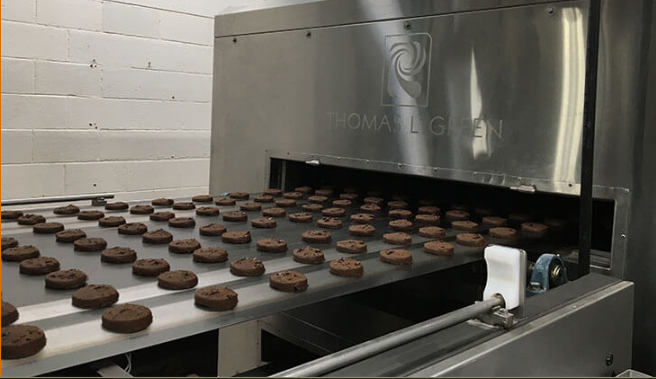
Here’s the thing: IR heaters don’t care about the air. They send out electromagnetic radiation that hits your target directly. When you put those heaters inside a stainless steel oven, the walls act like mirrors. They bounce those waves back, focusing all that energy right onto your workpiece. It makes the ramp-up time incredibly fast. You can basically say goodbye to that long, boring pre-heating phase.
Why stainless steel matters
We use stainless steel for the body, but it isn’t just to keep things from rusting. Because the material is so reflective, it works hand-in-hand with the IR lamps to stop heat from leaking out. Plus, since IR lamps hit their target temperature almost instantly, you aren’t left idling at high power while you wait for the oven to “get ready.” That’s where you’ll actually see your electricity bill start to drop.
The trade-offs
Now, it’s not magic. There is a catch. IR heating gives you way more heat density than those old coils, which means you can use a smaller oven without losing any power. But since IR heat is directional, it only hits what it can “see.” If your parts have weird shapes, deep holes, or complex curves, you might run into cold spots where the radiation can’t reach. To fix that, you just have to be smart about where the lamps go, or maybe mix in a fan to keep the temperature even across the whole load. At the end of the day, switching to IR just removes the lag. You stop paying to heat the air and start paying to heat the part.