


Why Most Bathroom Heaters Fail (And How We Fixed It)
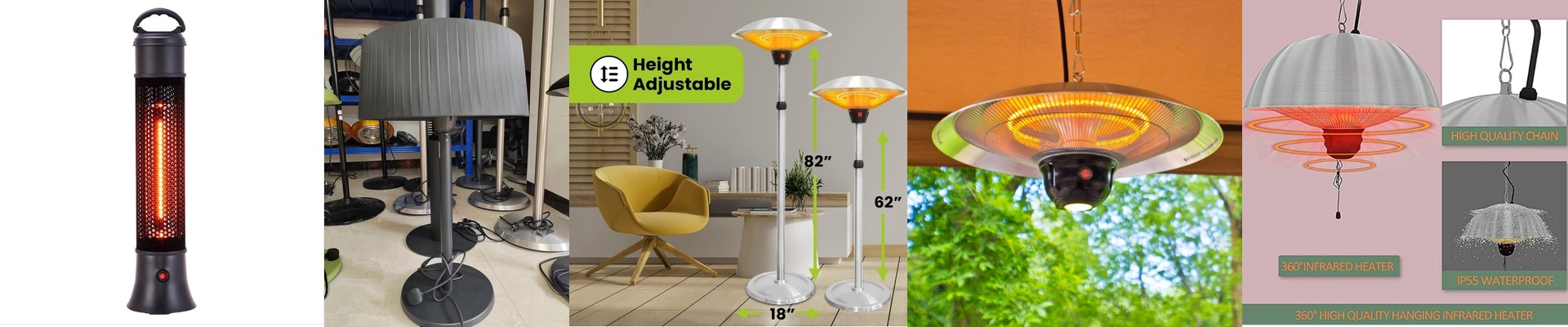
If you’ve ever put a heater in a steam room or a shower, you know the struggle. You aren’t just dealing with a bit of humidity; you’re fighting a constant battle against moisture and thermal shock. Most standard heating elements just can’t hack it. They short out, they pop, and they die. That’s why we build our waterproof table heaters to the IP55 standard. It’s basically a fancy way of saying we’ve locked the dust and water spray out so your circuits don’t fry.
The “Pop” Factor: Explosion-Proof Quartz
Here is the thing about cheap infrared lamps: they use thin glass. Imagine a tube glowing at 600°C. Now imagine a single, cold drop of water hitting it.**Crack.**It shatters instantly. We don’t do that. We use explosion-proof quartz tubing. It’s a tougher material that handles those wild temperature swings without breaking a sweat. We chemically strengthen the quartz to keep the seal tight, which stops moisture from sneaking into the filament chamber. That “burn out” you see in so many bathroom heaters? That’s exactly what we’re preventing.
Keeping the Guts Dry
You might wonder why the IP55 rating actually matters. Well, steam is sneaky. It penetrates much deeper than actual liquid water. If your seal isn’t tight, condensation builds up right on the terminals. That leads to arcing, which is a polite way of saying “electrical sparks where they shouldn’t be.” We seal the wire entries and the reflector housing tight to make sure the internals stay bone-dry.
A Few Real-World Tips
Look, high-density infrared heat is powerful, but it isn’t magic. It’s an intense tool. Because these tubes get incredibly hot, you’ve got to think about your mounting brackets. Metal expands when it heats up, so give it some room to breathe. And for heaven’s sake, don’t mount it too close to plastic fixtures—they will warp. Also, double-check your wiring gauge. Make sure it’s rated for the wattage so you don’t run into voltage drops. We designed these to be easy. When a tube finally reaches the end of its life, you just swap it out, check the seal, and you’re back in business. Simple.